
Checking Clay County Criminal History
Begin with the question the record must answer. The Clay County Clerk of Court and Comptroller holds criminal case dockets, filed counts, hearings, judgments, and sentences. The Clay County Sheriff's Office holds its reports, arrest information, booking data, and current jail records. FDLE supplies a statewide Florida history product, while the Florida Department of Corrections covers state prison and felony supervision. Each source has a narrow job. A clear search checks the local event first and then confirms the final court result.
Gather the full name, spelling variants, approximate event date, and any case, report, or booking number. A case number is the strongest key at the Clerk. A booking entry can help identify the arrest agency and case number, but it cannot show whether the State Attorney later changed or declined a charge. Use this order:
- Choose the custodian based on the question: Clerk, sheriff, FDLE, or FDC.
- Search by case number when possible, then try name variants and a wider date span.
- Match the person and event through dates, agency, court, and charge details.
- Read the docket disposition rather than stopping at the arrest allegation.
- Request a certified copy or fingerprint personal review when the purpose calls for one.
Clay County Court Search Paths
The Clay County Clerk homepage is the official front door for court services, records, payments, archives, and court contacts.
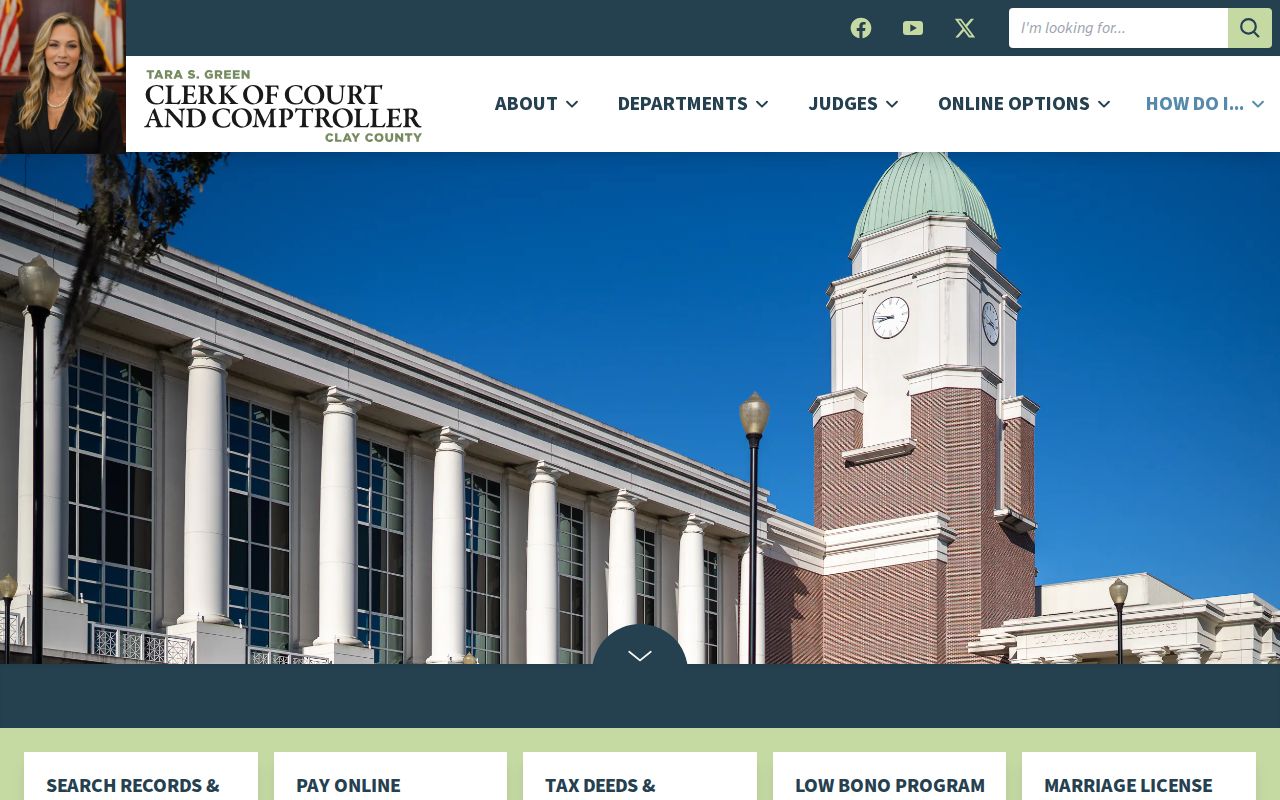
From that agency page, move into Search Records rather than assuming every link reaches the criminal docket.
The Clerk's Search Records page separates Court Records from Official Records. Choose Court Records for a criminal prosecution. Official Records mainly concerns recorded instruments and is not a substitute for the criminal docket. Search by party name or case number, then narrow the date and criminal case type if the live vendor form offers those controls. Exact dropdown choices can change, so the Clerk landing page is the durable starting point.
The official search menu is shown in this Clay Clerk source view.
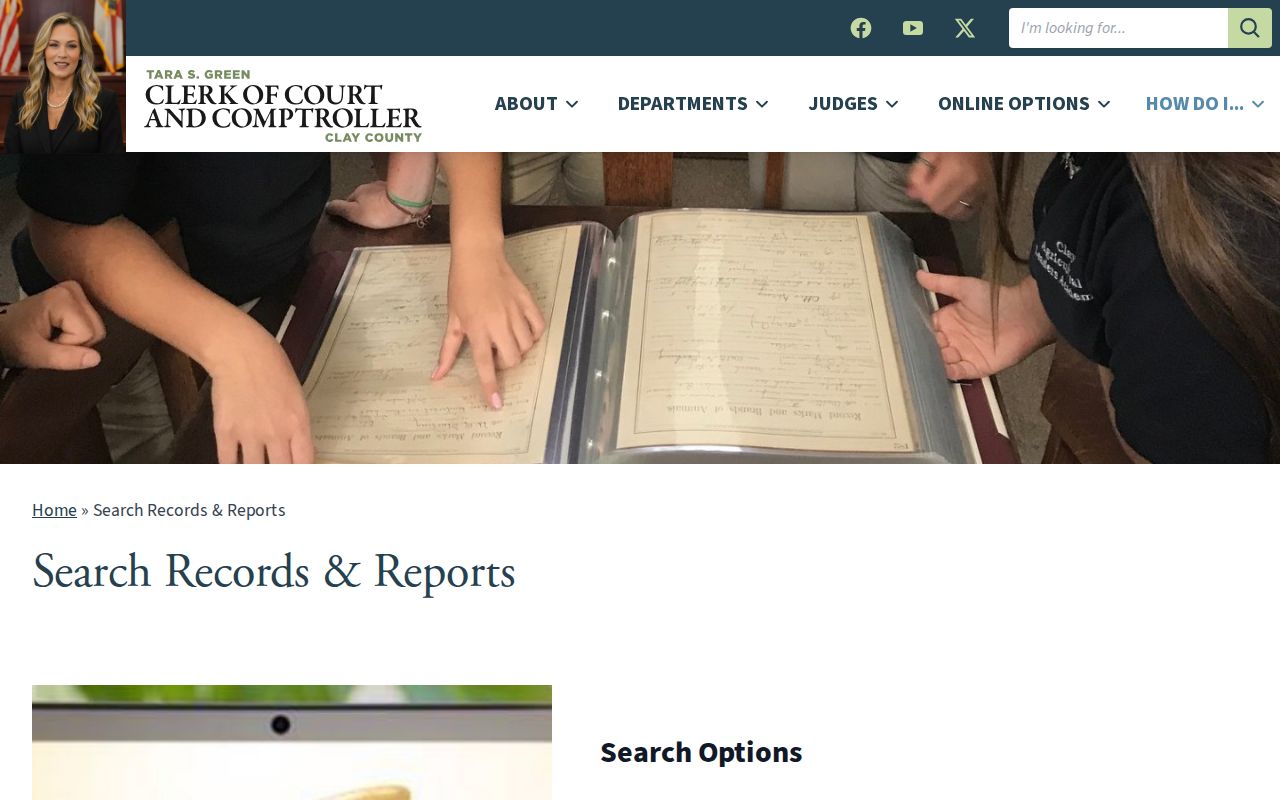
That menu matters because a broad records label can lead to the wrong database. If a current case does not appear, try surname-only, alternate spacing, and the precise number from a booking record. Confidential, sealed, older, or newly filed material may require help from Criminal Court Services.
| Search field | Best use | Limit |
|---|---|---|
| Party or business name | When no case number is known | Try spelling variants |
| Case number | Direct match to one file | Enter the full number |
| Date range | Reduces common-name results | Filing may lag arrest |
| Case type | Focuses on felony or misdemeanor files | Live options may change |
Florida Official Background Checks
The Florida Department of Law Enforcement, Division of Criminal Justice Information Services, runs the central state repository. Its Instant Florida Criminal History Search is open to the public. The transaction costs $24 plus a $1 card charge and returns an immediate, noncertified, name-based Florida result. A staff-run certified or noncertified search costs $24 and follows FDLE's published mail processing times. None of these products automatically supplies a federal or other-state history.
This FDLE search interface shows the statewide entry point used for a Clay County record search.
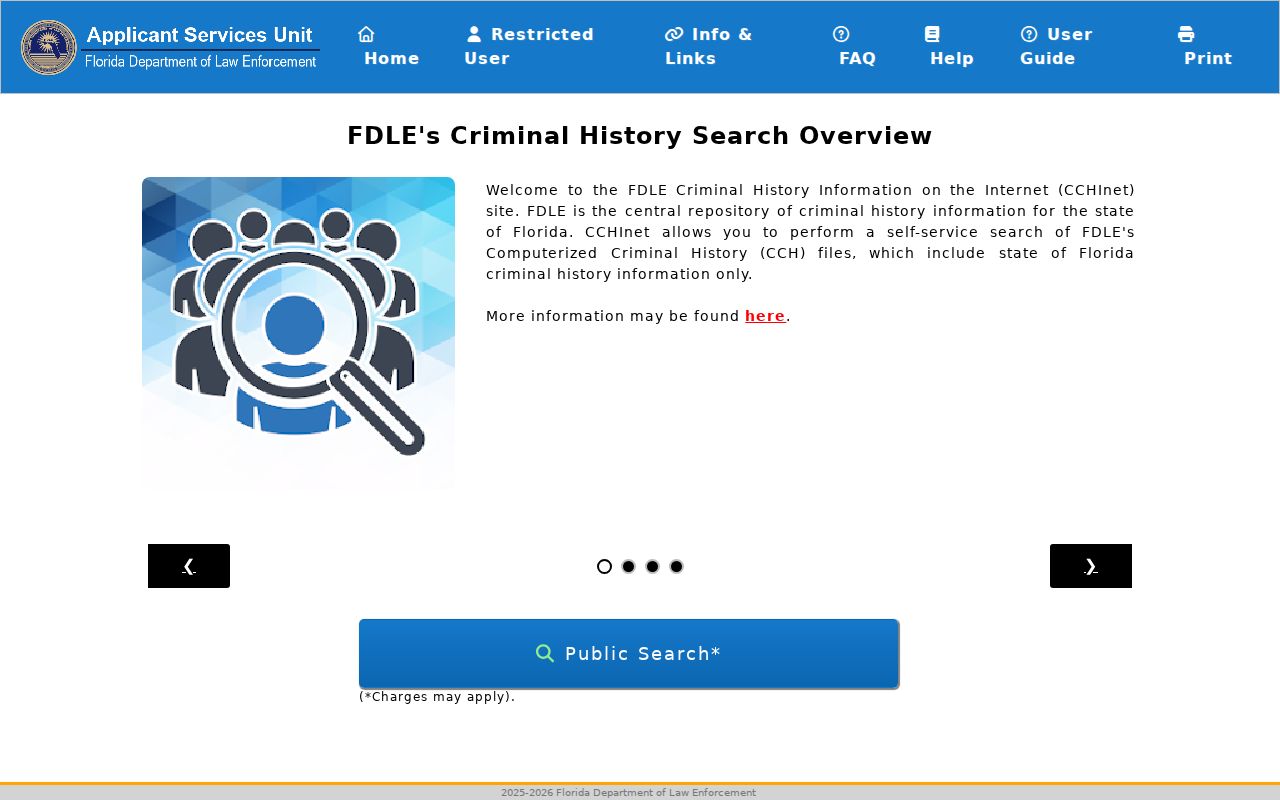
A name match is not fingerprint confirmation. For a person reviewing their own Florida record, FDLE offers a no-fee Personal Review under section 943.056. A law-enforcement or criminal-justice agency takes the fingerprints, and FDLE says processing can take up to 30 working days. The review also supplies a route to challenge an incomplete or inaccurate entry.
| FDLE product | Fee | Use |
|---|---|---|
| Instant Search | $24 plus $1 | Immediate, noncertified name search |
| Staff search | $24 | Certified or noncertified mailed result |
| Personal Review | No FDLE fee | Fingerprint-linked self-review and challenge |
| ORI LiveScan | Varies | Authorized check with agency-supplied ORI |
Correcting a Clay County Record
When a Clay County court docket shows a disposition that is absent or wrong in the statewide history, compare the two records before seeking a correction. Obtain the Clerk's certified disposition for the count at issue. Then use FDLE's fingerprint Personal Review to see the identity-linked state entry and follow its challenge process. A dismissal does not erase the arrest cycle by itself, but the disposition should be reported accurately.
The FDLE Personal Review instructions explain who may apply and how fingerprints are submitted.
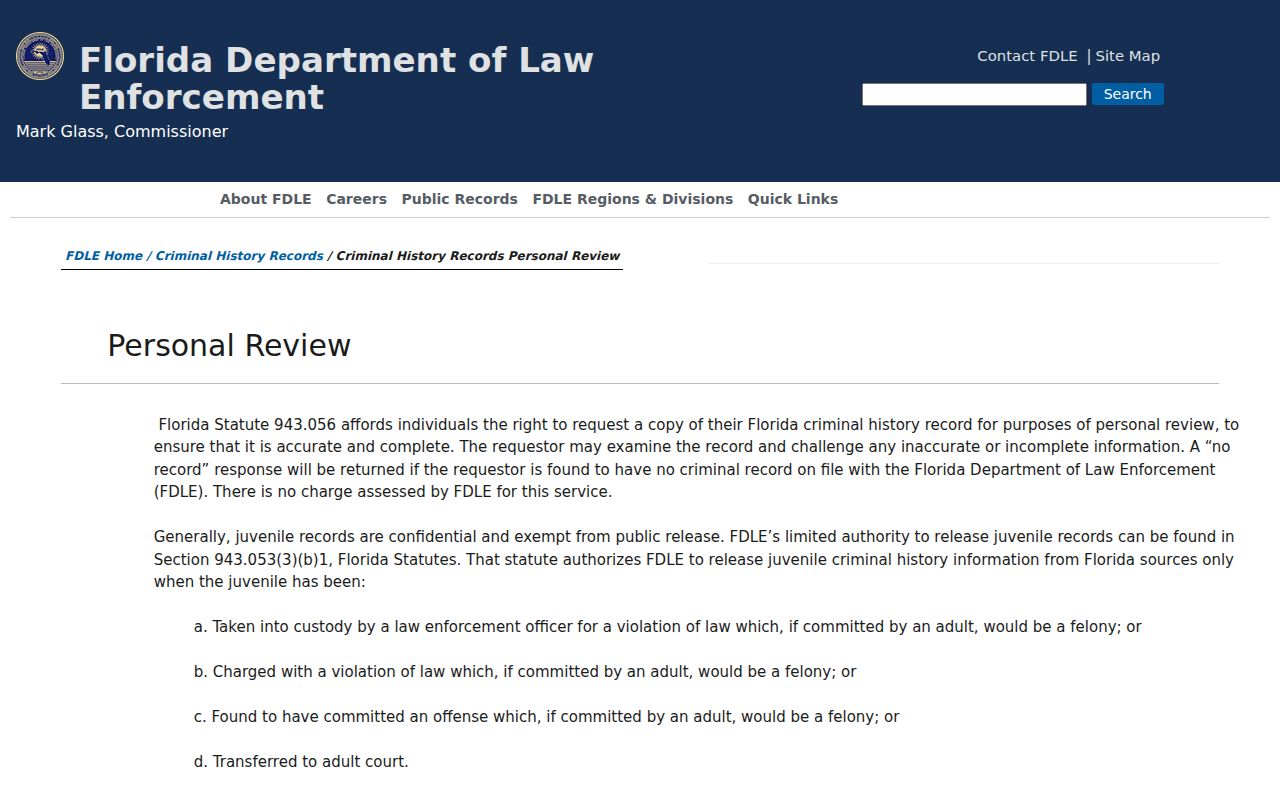
This self-review channel is different from sealing or expunction. Correction addresses inaccurate or incomplete data. Record relief asks a court to restrict an otherwise valid event after FDLE issues a Certificate of Eligibility. Keep the certified Clay County disposition because it can support either path.
Criminal Record Types
Clay County criminal records describe different stages of one event. An officer creates an incident or arrest report. The jail makes a booking file after intake. The State Attorney may file an information, decline the case, or change the accusation. The Clerk then maintains the court docket, orders, pleas, judgment, sentence, and financial entries. Qualifying fingerprint events and later dispositions flow to FDLE, while FDC adds state custody or felony-supervision events.
The source must match the question. A police narrative comes from the creating agency. Current custody belongs to the Clay County Jail. The final result of a filed charge belongs in the Clerk's case file. State prison status belongs in the Corrections Offender Network. Registry listings cover only people who meet Florida's statutory registration rules.
- Arrest and booking records: allegations, intake, bond, holds, and release data.
- Criminal court files: filed counts, motions, hearings, pleas, and dispositions.
- FDLE history: statewide fingerprint arrest cycles and reported outcomes.
- Warrant or capias records: court-issued process tracked by law enforcement.
- Custody and registry records: limited systems for their stated populations.
Clay Sheriff Records Requests
The Clay County Sheriff's Office Public Records Section is the fallback for releasable arrest reports, incident reports, booking material, and jail records not exposed online. Requests may be anonymous, need not be written, and do not require a stated purpose. Give the report or booking number when known, along with the date, place, agency, and a narrow date range. Ask for an electronic copy when practical and request an estimate if extensive clerical or technology work may create a special-service charge.
The CCSO request instructions show the available public-record channels.
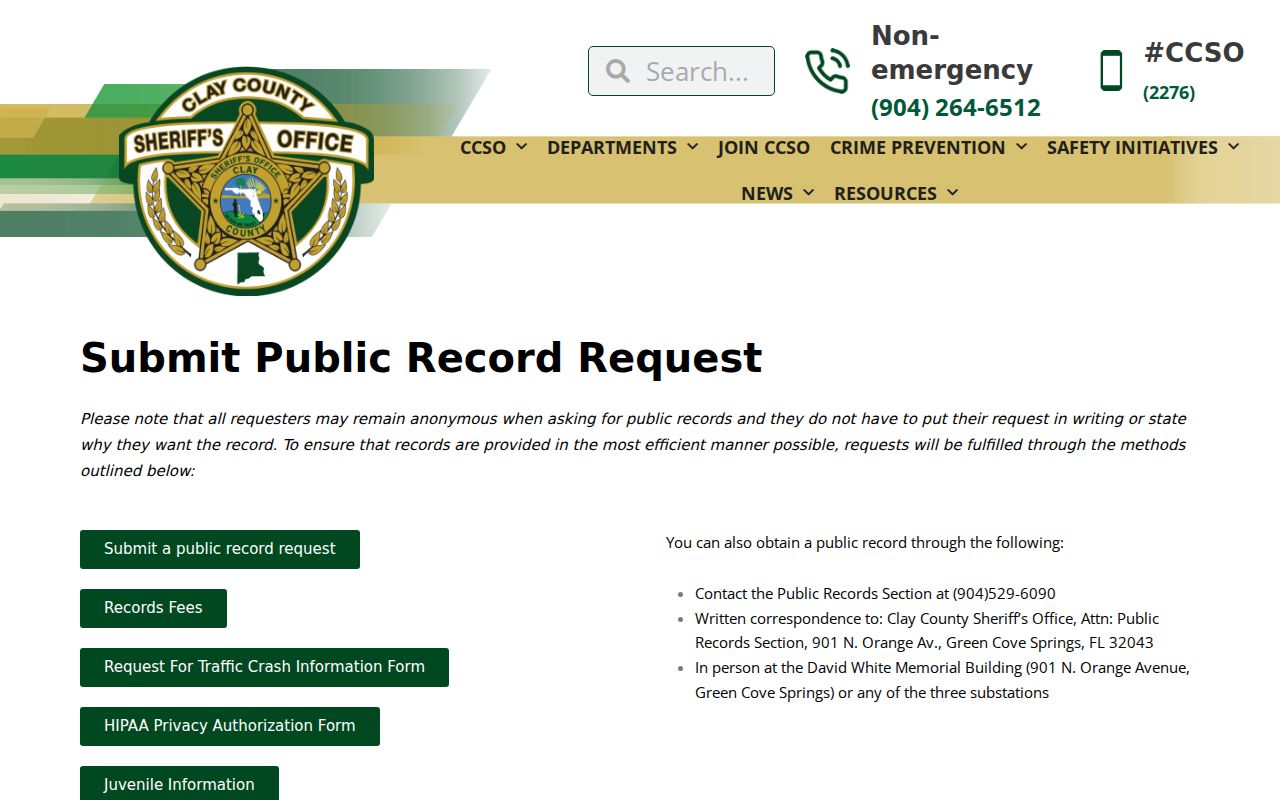
That route reaches agency-created records, not the Clerk's litigation file. CCSO may redact active investigative information, protected victim data, juvenile material, medical information, and exempt identifiers. Ask for the nonexempt remainder and the legal basis for any redaction. Florida law does not set one fixed response period for every request.
CCSO Public Records
901 N. Orange Ave.
Green Cove Springs, FL 32043
(904) 529-6090
Criminal Court Services
825 N. Orange Ave.
Green Cove Springs, FL 32043
(904) 278-4799
Inside a Clay County Criminal Record
A complete reading links identity, event, court, and outcome fields. Names and aliases help match the subject, but common names require dates and case identifiers. Arrest fields show what law enforcement asserted. Filed charge rows show what prosecutors carried into court. The disposition by count is the key correction to an arrest-only view because one case may contain dismissed, reduced, acquitted, and adjudicated counts.
| Name & Identifiers | Displayed name, aliases, birth data, state ID, FBI number, and fingerprint identifiers where available. |
|---|---|
| Arrest / Booking Data | Agency, arrest date, booking number, intake charge, bond, holds, and release status. |
| Charges & Statutes | Filed count, Florida statute, offense degree, and later amendments. |
| Disposition | Plea, dismissal, nolle prosequi, acquittal, adjudication, or withheld adjudication by count. |
| Sentence | Jail or prison term, credit, probation, costs, restitution, and conditions. |
| Custody / Supervision Status | County jail custody, FDC location, release dates, probation, or community control. |
Read date labels closely. Filing, arrest, booking, judgment, and release dates mark different acts. Bond is security for release and appearance, not a finding of guilt. A capias is court-issued arrest process. Nolle prosequi means the prosecutor ended a count. Adjudication withheld means the court withheld a formal conviction despite a plea or finding, and it should not be casually described as a dismissal.
Clay County Jail Record Flow
The Clay County Jail is a 490-bed CCSO facility. Its Recent Arrests catalog answers whether a booking event was posted, while the Inmates catalog focuses on current or recent custody. An arrest can remain in the first catalog after release. A person absent from the inmate list may have bonded out, completed a short sentence, transferred, or been released for another reason. The jail line, (904) 529-5905, is the direct fallback for custody questions.
The official jail information page places the custody tools in their local context.
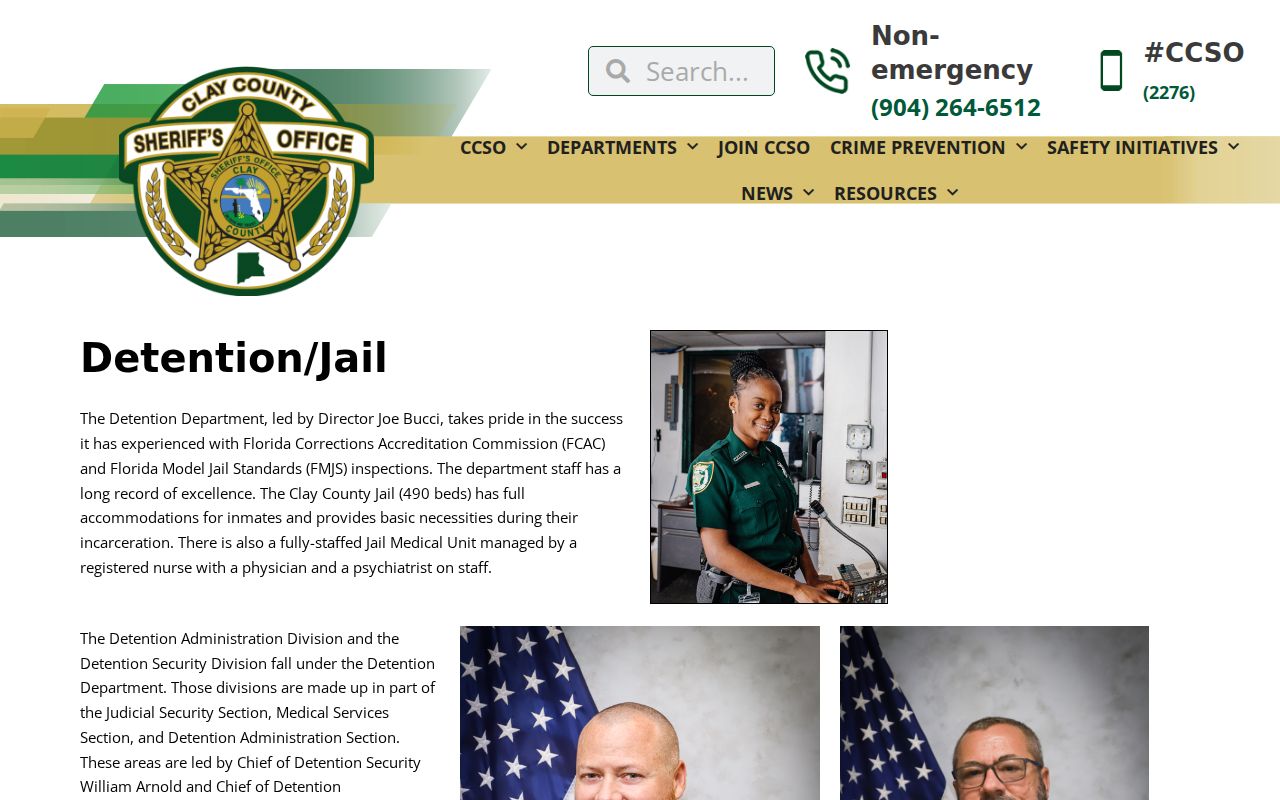
Booking data can list intake charges, bond by count, a total bond, holds, and a court date. Total bond may combine several rows and may not equal the cash needed for release. Confirm court dates and charge outcomes through the Clerk. The record flow is: arresting agency → Clay County Jail → State Attorney screening → Clerk case file → FDLE disposition reporting.
Note: A Clay County booking allegation is not proof of guilt, and the court disposition can differ sharply from the intake charge.
Public Access Laws in Florida
Florida uses separate rules for agency records, court files, and state criminal-history dissemination. Chapter 119 lets a person inspect or copy nonexempt agency records at reasonable times. Court records are governed by Rule 2.420, which presumes access while protecting stated confidential categories. FDLE releases criminal-history information under section 943.053. A custodian can redact protected content and release the rest rather than withholding every page.
Key Statutes:
Florida Statutes §119.07 permits inspection and copying of nonexempt public records.
Florida Rule 2.420 governs public access and confidentiality in judicial records.
Florida Statutes §943.053 controls FDLE criminal-history dissemination and fees.
Florida Statutes §943.059 sets the court-ordered sealing process.
Public does not mean unrestricted in every setting. Juvenile matters, sealed files, protected victim information, medical data, active investigative intelligence, and exempt identifiers may be hidden. Remote document access can also be narrower than courthouse inspection. When a docket is visible but an image is blocked, note the case number and document title and ask Criminal Court Services whether a public copy can be inspected or ordered.
Clay County State Custody Records
The Florida Department of Corrections covers people sentenced to state prison and many forms of felony supervision. Its Corrections Offender Network supports name and DC Number searches, aliases, status, institution or supervision location, offense rows, county and case data, sentence details, custody dates, and release information. It does not cover people held only in the Clay County Jail.
The FDC Offender Search provides the statewide custody layer used after a Clay County sentence.
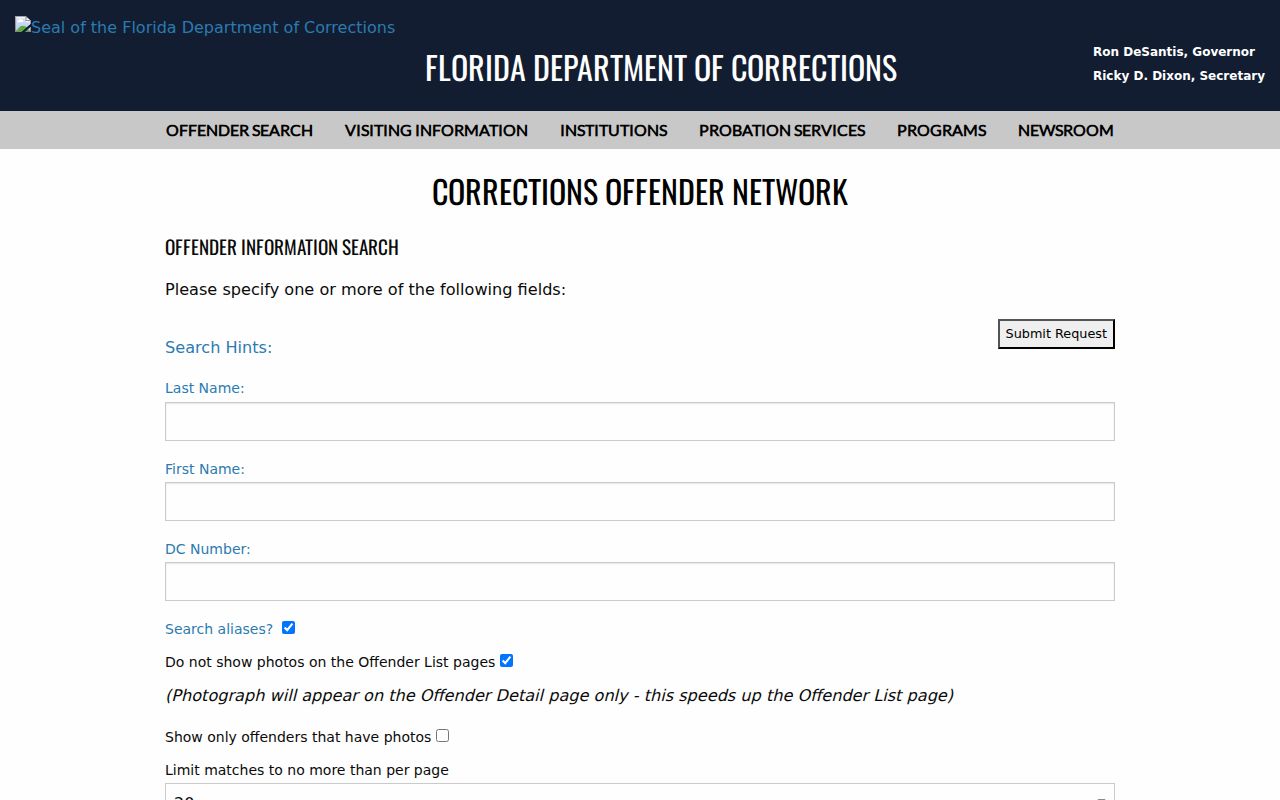
An exact DC Number is the best identifier. Name searches support prefix matching and optional aliases, so verify the county, case, offense, and sentence rather than relying on a name alone. A person absent from FDC may still be in the county jail, have a misdemeanor case, have completed supervision, or never have received an FDC sentence.
Florida's Commission on Offender Review handles eligible legacy parole cases and other conditional-release functions. Florida abolished parole prospectively for offenses committed on or after October 1, 1983. Local court dockets remain the best public evidence of the sentence that led to supervision.
Sealed, Expunged, and Restricted Records
Florida uses both sealing and expunction. Sealing keeps an eligible record but makes it confidential, subject to statutory access. Expunction generally directs agencies to destroy or obscure the record, though FDLE and listed entities retain limited responses. Neither result occurs just because a charge was dismissed. The process begins with an FDLE Certificate of Eligibility and then moves to a petition in the Clay County court.
The certificate application costs $75 and requires fingerprints, certified dispositions for every charge, and supporting proof where needed. FDLE estimates about 12 weeks after receiving a complete packet and does not expedite. Expunction also requires prosecutor certification. A certificate is generally valid for 12 months, is not a court order, and does not guarantee relief because the judge retains discretion.
The FDLE sealing and expunction process gives the official statewide sequence. Clay County filing and copy costs are separate, and Criminal Court Services should confirm the current amount before filing. Juvenile and other restricted files follow their own confidentiality rules.
Clay County Warrant Limits
CCSO does not publish active warrants online and will not confirm them by telephone. That limit is unusually strict. A person checking their own status must appear at headquarters or an operations center with photo identification, or consult legal counsel. A known Clerk docket may show a capias or warrant event, but a missing docket entry is not clearance because issuance, indexing, and access can differ.
The Clay County Sheriff's Office is the official source for its warrant procedure and local operations information.
Do not rely on commercial warrant pages. For one's own known case, read the Clerk docket for court-issued process and contact the issuing court about procedure. For police narratives or arrest reports, use the creating agency's records unit. These channels answer different questions, and no public CCSO web portal fills the active-warrant gap.
Clay County Federal Record Layer
Federal criminal cases involving Clay County are separate from the county Clerk, CCSO, FDLE, and FDC systems. Clay County lies in the Middle District of Florida's Jacksonville Division. PACER supplies federal dockets, while the Federal Bureau of Prisons locator covers people in federal custody. An FBI Identity History Summary is the subject's federal fingerprint-based history, not a Clay County court search.
The Jacksonville federal courthouse page identifies the court serving Clay County.
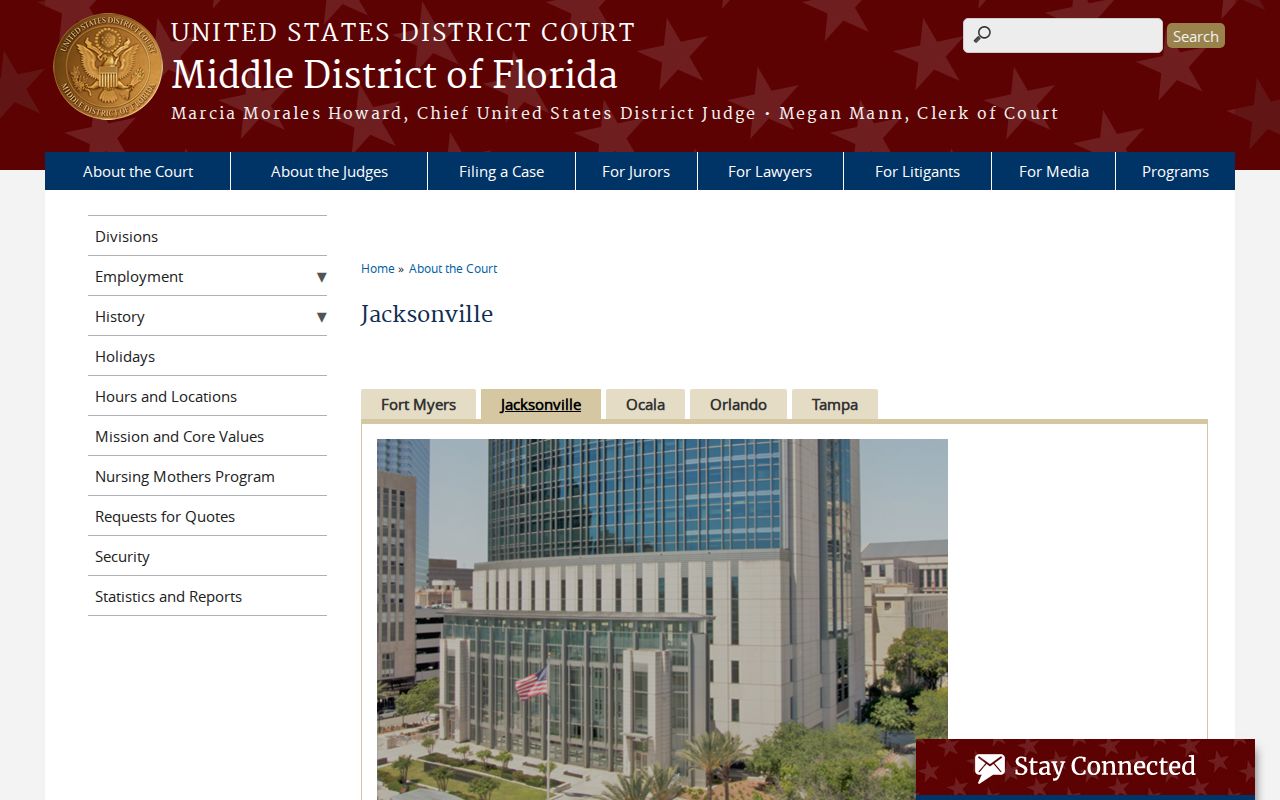
The federal court is at 300 N. Hogan Street in Jacksonville. PACER currently charges $0.10 per page, caps many case-specific documents or reports at $3, and waives quarterly fees of $30 or less. Those charges and systems do not buy a county sheriff report or Florida court file.
The Bureau of Prisons locator is the proper federal custody search.
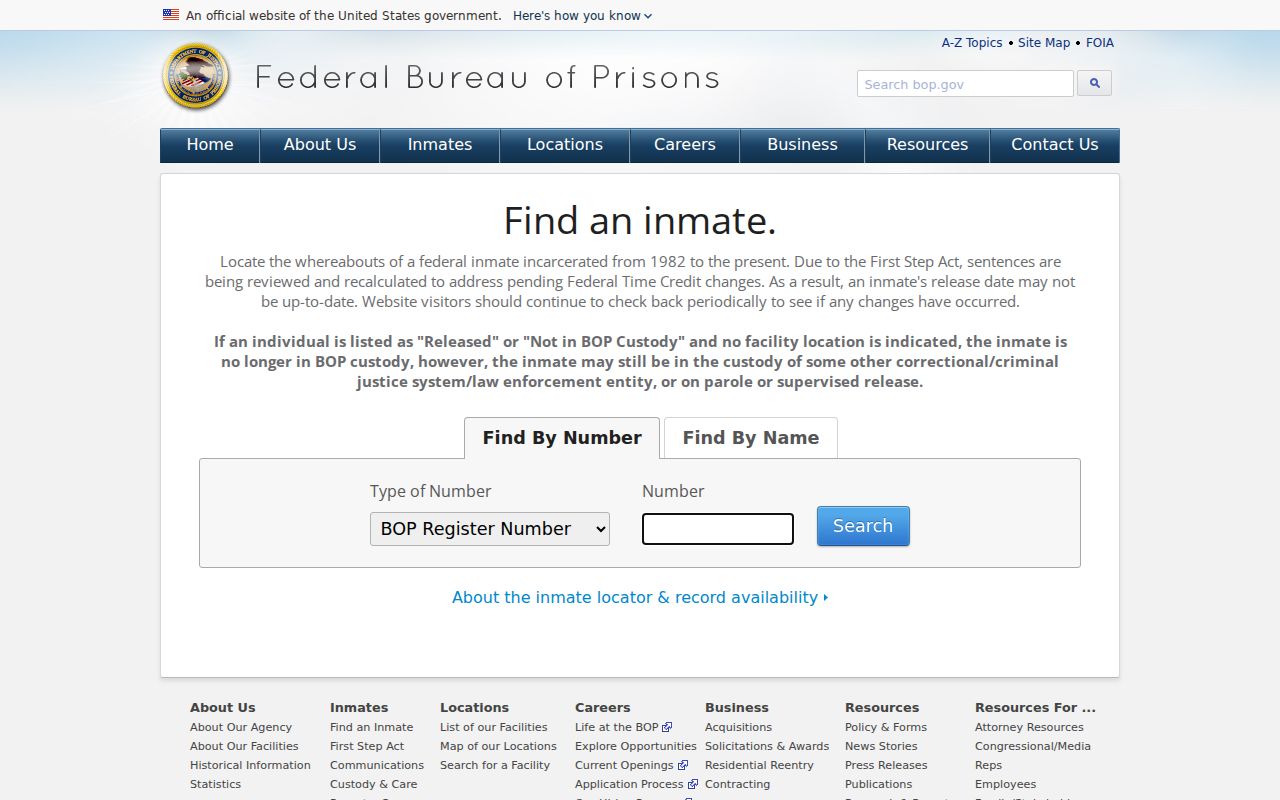
A person missing from BOP may be in local or state custody, released, or never federally sentenced. Check the system that matches the sentencing authority.
Clay County Criminal Records by City
Municipal police departments create their own incident and arrest reports, but felony and misdemeanor prosecutions move into Clay County Circuit or County Court. Green Cove Springs has a city police records counter and report portal. Orange Park Police routes report requests through its local channels while jail and court questions move to CCSO and the Clerk. Keystone Heights contracts primary law enforcement to CCSO and has no separate municipal criminal court. Each city path therefore starts at a different altitude.
Green Cove Springs Criminal Records
City police reports, local request fees, and county court routing.
Orange Park Criminal Records
Town police records with CCSO jail and Clerk case fallbacks.
Keystone Heights Criminal Records
CCSO law enforcement and county-level court access.
City boundaries do not create separate state histories. A city report remains with the creating police agency, a booking moves through the Clay County Jail, and a filed prosecution appears with the Clerk. FDLE receives qualifying fingerprint events and reported dispositions at the statewide layer.