
Fingerprint Checks for Clay Matches
FDLE warns that a registry match is not a positive identity finding. Names, birth dates, photographs, scars, tattoos, and addresses can help distinguish results, but fingerprints are the reliable comparison method. This matters when two people share a name or when a saved profile has aged.
Use the live profile first. If identity remains important, contact FDLE or the responsible law-enforcement agency about the official verification channel. Do not publish a guess, approach a listed address, or assume that resemblance establishes identity.
Clay Addresses and Registry Status
Profiles can distinguish permanent, temporary, and transient addresses. The labels reflect statutory reporting categories, not a judgment about a neighborhood. A map point can also lag a reported move or agency update. Review the status and verification details with the address type.
When a Clay County registry address appears inaccurate, save the profile identifier and contact CCSO or FDLE Registry Services. State the address and why it seems wrong. Law enforcement can compare current registration records. Community members should not investigate by confrontation.
Sex Offender Checks in Clay County
The Florida Department of Law Enforcement maintains the Florida Sexual Offender and Predator Registry. The Clay County Sheriff's Office performs local registration and verification duties, while FDLE publishes the public information. Covered changes or events generally require local action within 48 hours. That division matters when a Clay County registry address seems wrong: report the concern to law enforcement or FDLE instead of approaching the registrant.
The registry offers Offender Search, Neighborhood Search, University or Campus Search, and Internet Identifier Search. Use Offender Search to list Clay County or match a known name. Use Neighborhood Search for an address and radius. The national Dru Sjodin National Sex Offender Public Website, NSOPW.gov, adds a cross-state search layer.
Listing Clay County Registry Results
The FDLE registry search-modes page is the official starting point. To list the county, open Offender Search, leave names blank, and select Clay County. At least one of First Name, Last Name, City, County, or ZIP must be supplied. Partial names work.
The official search-mode screen below lets a reader choose the right Clay County sex offender search without centering a private profile.
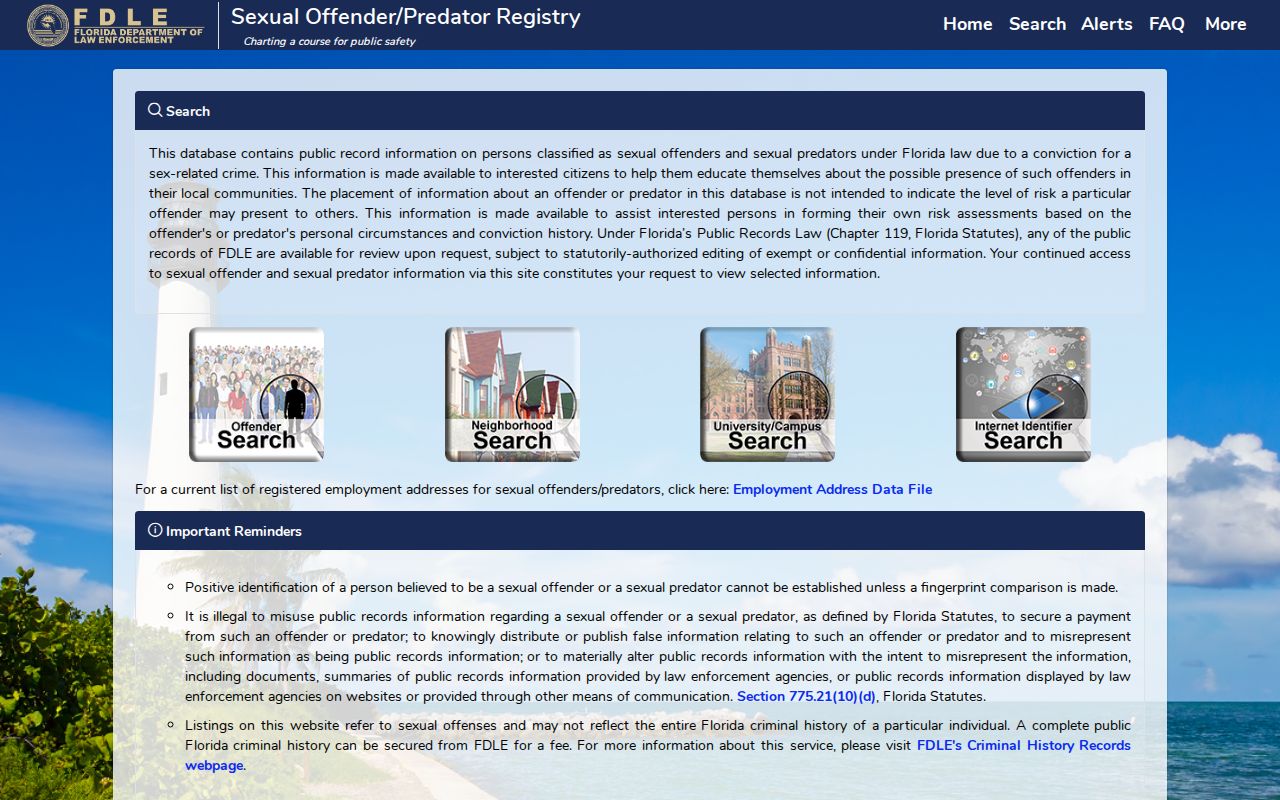
Selected results can be printed to PDF, limited to 25 at a time. Registry data changes quickly, so confirm the live profile before relying on a saved printout.
How to Search the Florida Registry
A focused Clay County registry check starts with the question. County filtering provides a broad list. A name search is better for a known person. Neighborhood Search is built for awareness near a specific address.
- Open the FDLE registry and choose Offender Search or Neighborhood Search.
- Enter a partial or full name, or select Clay County; for a neighborhood, enter address, city or ZIP, and radius.
- Review results and compare name, photograph, physical description, and other identifiers.
- Open the profile and read designation, address type, status, offense, and verification details.
The official offender form shown here contains the name and location controls.
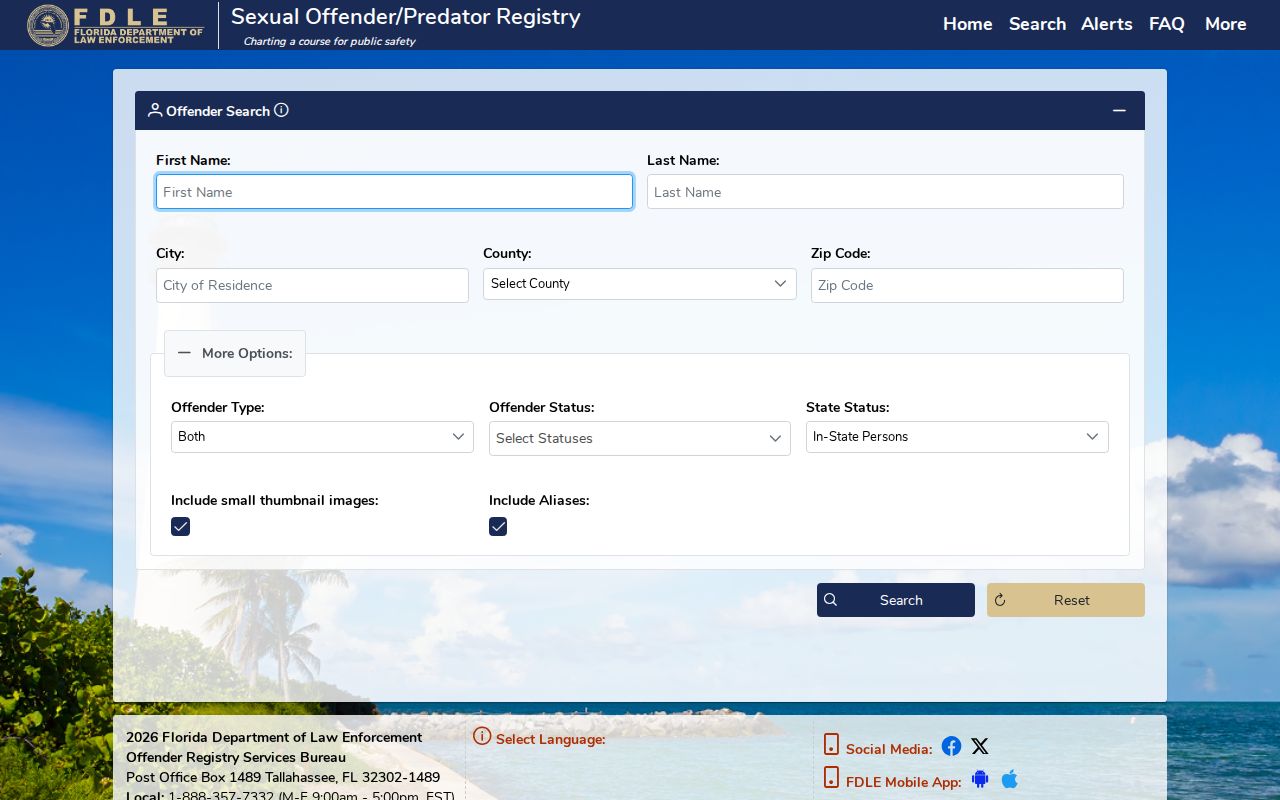
FDLE warns that fingerprint comparison is required for positive identification. Similar names, ages, or appearances are not enough.
| Field | Type | Required | Notes |
|---|---|---|---|
| First Name | Text | Conditional | Partial supported |
| Last Name | Text | Conditional | Partial supported |
| City | Text | Conditional | One locator field required |
| County | Dropdown | Conditional | Select Clay |
| ZIP | Text | Conditional | Florida ZIP |
| Address and Radius | Text and dropdown | Neighborhood mode | Verify current radius options |
Neighborhood Versus County Search
A county search returns records associated with the selected county filter. It is useful for a broad Clay County registry list or public-data review. A neighborhood search instead starts with an address and radius. It is better for checking the area near a home, school route, park, or family destination, but the map still reflects reported registry data rather than a promise that every address is current at that moment.
Internet Identifier Search and University or Campus Search answer narrower questions. NSOPW can check participating jurisdictions across state lines. None replaces direct review of the current Florida profile or local law-enforcement follow-up when an address appears inaccurate.
Inside a Registry Profile
A Clay County sex offender registry profile combines identity, designation, address, conviction, and compliance-related fields. It does not publish victim names, and it is not the court's complete case file. Use the conviction county listed in the profile to locate the underlying court record and the arresting agency for the original report.
| Name and aliases | Reported current name and other known names. |
|---|---|
| Photo and description | Photograph, date of birth, physical traits, scars, marks, or tattoos when released. |
| Address | Permanent, temporary, or transient address and map information. |
| Offense | Conviction jurisdiction, date, statute, description, and victim age category where lawful. |
| Designation | Sexual offender or court-designated sexual predator, not a risk tier. |
| Status | Registration and compliance-related status, supervision office, vehicles, and other released details. |
A permanent address is a principal home. A temporary address can trigger reporting even if it is not the main residence. A transient designation reflects no fixed residence and carries reporting duties. Read the type before interpreting a map marker.
Registry Is Not Criminal History
The registry covers people who meet Florida's sexual-offender or predator definitions. It does not list every criminal case and should not be used as a general Clay County criminal-history report. FDLE's paid CCHInet product serves the statewide public name-search role, while the Clerk preserves the charge-level Clay court file.
Likewise, designation does not state an individualized chance of reoffending. “Sexual predator” is a court designation under section 775.21. “Sexual offender” arises chiefly from section 943.0435 criteria. Florida does not present these as a public Tier I, II, and III risk ladder.
Florida Registration Levels and Requirements
Florida's public categories are designations, not three risk tiers. Both are visible, and both commonly involve lifetime registration. Relief is narrow and fact-specific.
| Designation | Public meaning | Duration or relief |
|---|---|---|
| Sexual offender | Meets section 943.0435 criteria | Generally lifetime; limited petition route after at least 25 qualifying years, subject to exclusions |
| Sexual predator | Court designation under section 775.21 | Lifetime with community-notification duties; not a risk score |
The limited 25-year petition route measures time free from confinement, supervision, or sanction and requires no later arrest, with statutory exclusions. Reaching a date does not automatically remove a listing. Court action and legal eligibility still control.
Clay Sheriff and FDLE Updates
The sheriff registers and verifies local information; FDLE compiles and publishes it. Because addresses and statuses can change, FDLE states that it does not independently confirm every fact in real time. Suspected noncompliance should go to CCSO or FDLE Registry Services. FDLE's public line is 1-888-357-7332, weekdays from 8 a.m. to 5 p.m. Eastern, and its published email is sexpred@fdle.state.fl.us.
Do not confront a person at a listed address. Provide the agency with the profile identity, address at issue, and the reason it seems inaccurate. Law enforcement can compare the report with registration records and take the proper verification step.
Clay Registry Public Data File
The FDLE public-data download allows an email address and one or more counties, or the full state, to be selected. It suits county-level data work that does not profile a single person. A download is only a point-in-time file and can become stale.
The official public-data screen below shows the county-selection route.
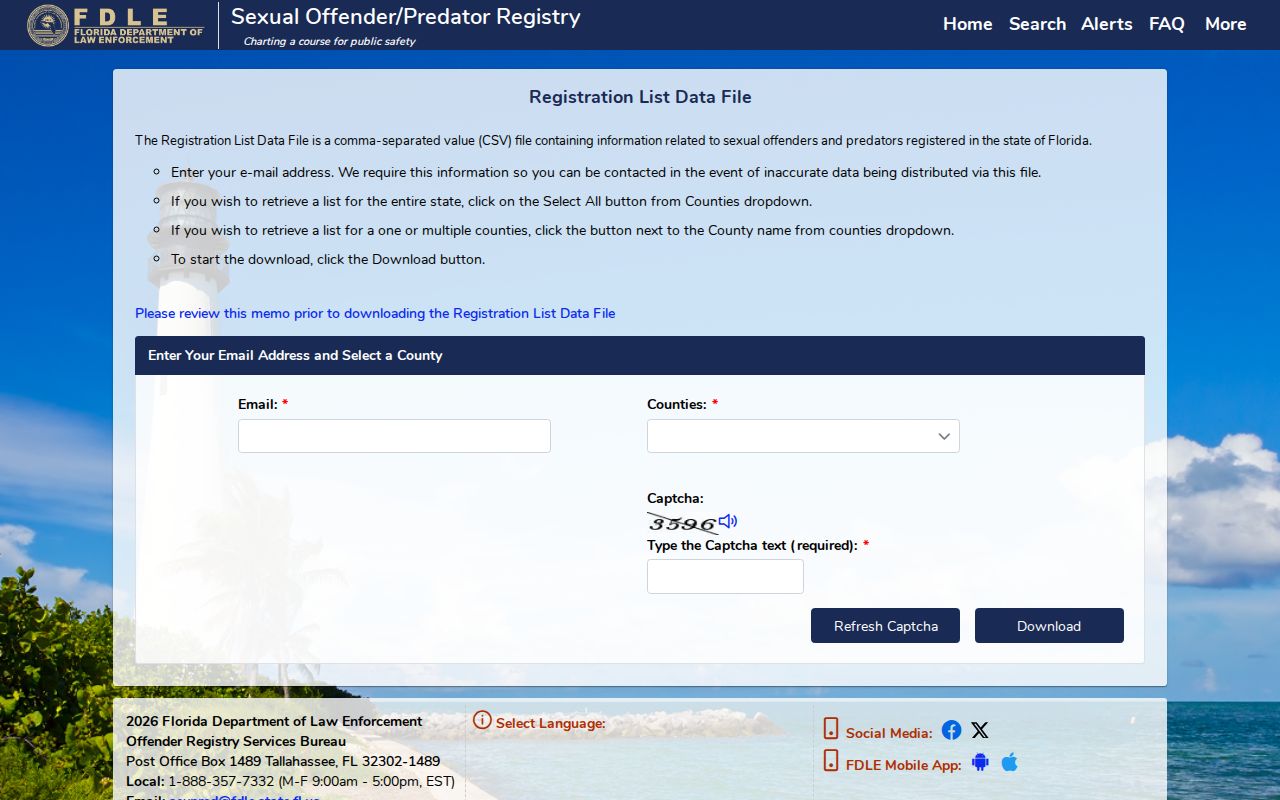
Return to live profiles for current status. Do not materially alter registry data or present a changed file as an official public record.
Florida Registry Law and Relief
Florida Statute 943.0435 defines and regulates sexual-offender registration. The official statute page pictured below supplies the legal text rather than a simplified risk label.
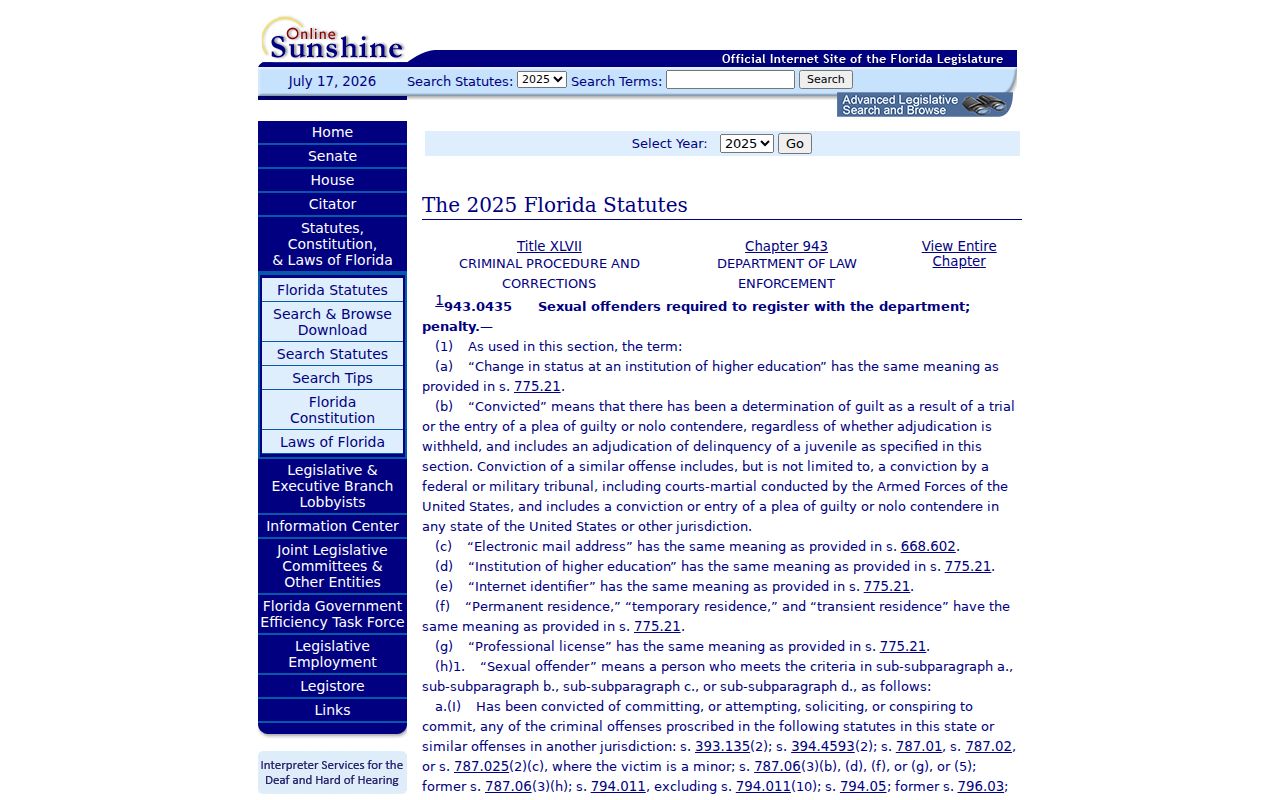
Registry removal and criminal-record sealing or expunction are separate legal issues. The FDLE sealing and expunction page shown here describes the certificate process for eligible criminal records.
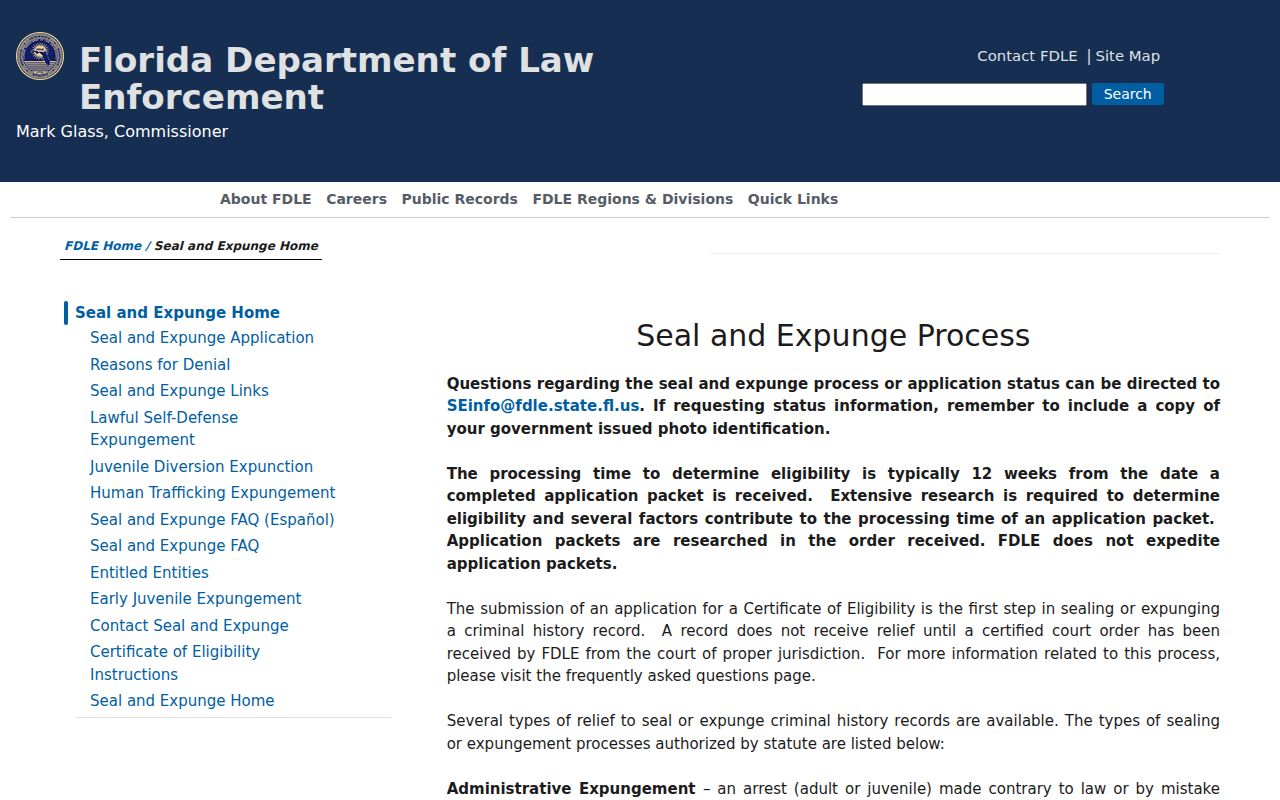
A sealed or expunged criminal record does not itself promise registry removal. Each duty and relief route must be assessed under its controlling law.
Community Notification and Lawful Use
The registry supports informed safety decisions and community awareness. It does not authorize harassment, vigilantism, threats, or knowingly false republication. Section 775.21(10)(d) addresses misuse that secures payment, knowingly publishes false registry information as a public record, or materially alters it to misrepresent the official information.
The Florida Sexual Predators Act is the primary official source for predator designation, notification, and misuse rules.
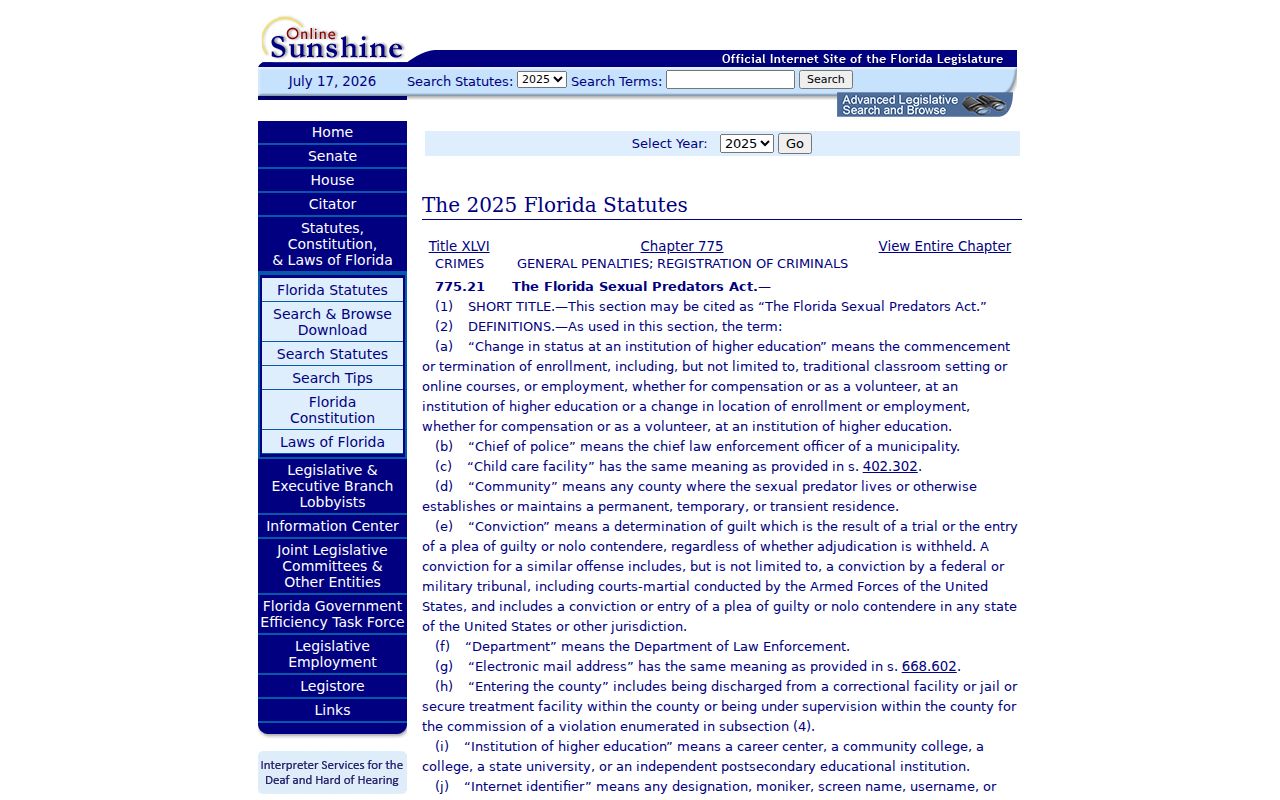
The statutory source gives the legal context that a search-result card alone cannot provide.
Note: Verify current Clay County registry information with FDLE or local law enforcement before acting on a saved result or data file.
Compare the live record date, designation, reported address type, and physical details before reporting a possible match to the proper agency. Saved results can become stale as registration data changes.